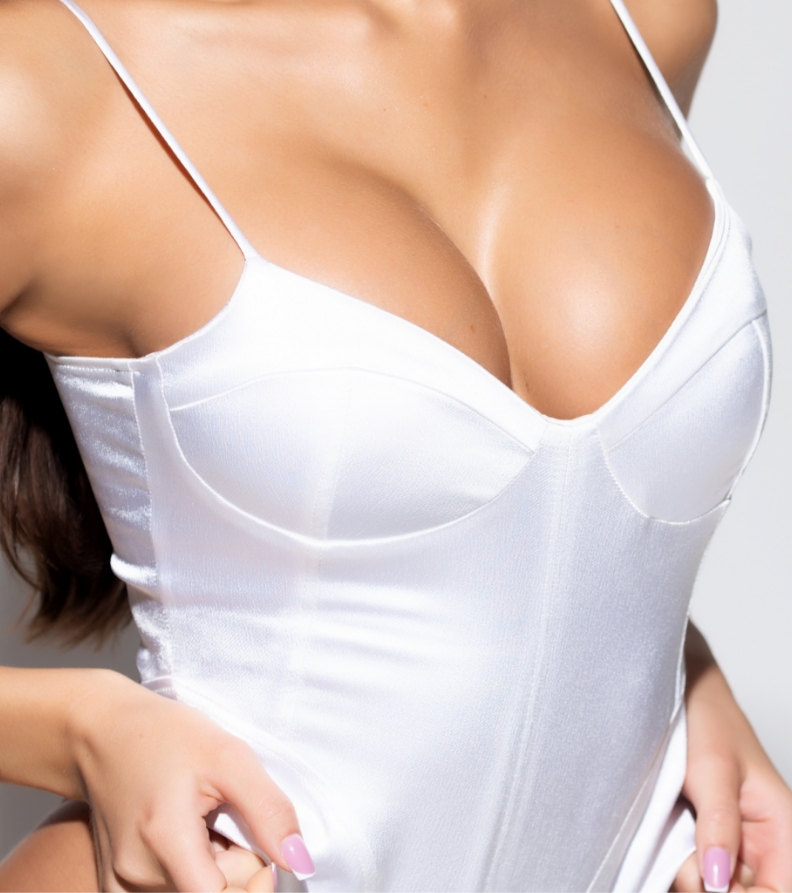
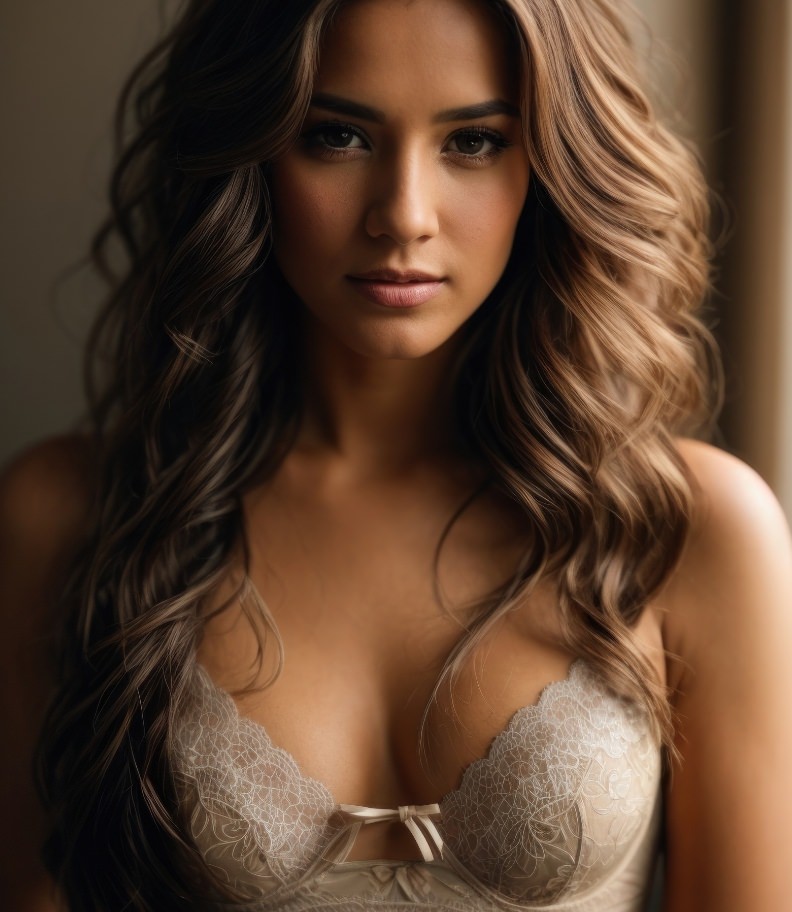
Our renowned breast enhancement specialists, Dr. Ashley Amalfi and Dr. Peter Krasniak are respected by leaders in the field for their attention to detail and focused expertise. They perform all breast augmentation procedures at the Quatela Center, giving patients the reassurance that comes from knowing their surgeon has performed thousands of breast augmentations for a diverse array of patients. Dr. Amalfi or Dr. Krasniak will begin your journey with an in-depth consultation to ensure you are a good candidate and feel comfortable, educated, and confident about your decision.
Model
Thank You Rochester for Voting Us the Best Plastic Surgery Practice
Quatela Center for Plastic Surgery 973 East Avenue Rochester, NY 14607 Phone: (585) 244-1000 Fax: (585) 271-4786 Monday–Friday: 8:30 a.m.–5 p.m.
Thank You Rochester for Voting Us the Best Plastic Surgery Practice
Breast Augmentation
Our renowned breast enhancement specialists, Dr. Ashley Amalfi and Dr. Peter Krasniak are respected by leaders in the field for their attention to detail and focused expertise. They perform all breast augmentation procedures at the Quatela Center, giving patients the reassurance that comes from knowing their surgeon has performed thousands of breast augmentations for a diverse array of patients. Dr. Amalfi or Dr. Krasniak will begin your journey with an in-depth consultation to ensure you are a good candidate and feel comfortable, educated, and confident about your decision.
Whether you want dramatic cleavage, subtle enlargement, or enhanced symmetry, our breast enhancement specialists have the talent, skill, and experience to make your vision a reality. They help you attain the look you want using the latest silicone breast implants or natural augmentation with fat transfer.
Anesthesia:
General
Recovery:
2 to 5 days
Resume strenuous activities:
3 weeks
Final results:
3 to 6 months
Procedure Snapshot
Breast Augmentation Before & After Photos
This gallery contains images intended for adult audiences.
Any woman who wants larger, shapelier breasts may be a good candidate for breast augmentation. The benefits of breast augmentation at the Quatela Center include:
Increasing the size of naturally small breasts
Restoring breast volume after having children, weight loss, or aging
Enhancing upper pole fullness and cleavage
Balancing breasts of different sizes
Achieving a well-proportioned figure
With their beautiful, natural-looking results, our breast augmentation patients feel more confident and feminine in clothing, swimwear, and intimate settings.
Is Breast Augmentation Right for You?
Ideal breast augmentation candidates are women who meet the following criteria:
Are in good overall health
Have reached a stable, healthy weight
Want the surgery for their own reasons, not someone else’s
Have realistic goals and expectations about the results
During an in-depth consultation, Dr. Amalfi or Dr. Krasniak will help you determine if breast augmentation matches your unique needs and cosmetic goals.
Breast Lift vs. Augmentation
Many women are unsure of whether to have breast augmentation or a breast lift. There are distinct differences between these breast enhancement procedures, including:
Breast augmentation adds volume to the breasts and can correct asymmetry.
Breast lift surgery addresses mild to significant sagging. It reshapes the breasts and areolas and elevates the breasts on the chest. A breast lift does not increase breast size and may even make the breasts look smaller.
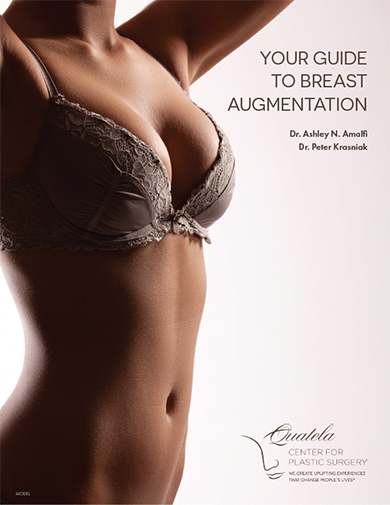
Want to learn more about breast implants and breast augmentation? Download our free eBook, Your Guide to Breast Augmentation Surgery, for a comprehensive overview of the most important aspects of breast implant surgery. Topics in our eGuide include breast implant size, shape, and material, incision site, implant placement, risks and complications, plus a handy surgery prep list.
Submit the form below to receive a link to our free eGuide.
Choosing the Right Breast Surgeon
The Quatela Center in Rochester is the choice for women who value safety and beautiful breast augmentation results. Many come here from Syracuse, Buffalo, and cities throughout Upstate New York. They also travel throughout the U.S. and worldwide to have our renowned specialists perform their procedures.
Dr. Amalfi is a board-certified plastic surgeon specializing in breast and body cosmetic surgery. Respected for her expertise and attention to detail, Dr. Amalfi often instructs industry leaders in the careful planning and execution of breast augmentation procedures and has presented at national conferences on advanced breast techniques. She is popular with patients who want more natural breast enlargements and attracts complex cases from outside the area. As a woman and mother, Dr. Amalfi develops a special bond with her breast enhancement patients and works alongside them to choose the right procedure and implant to achieve their unique cosmetic goals.
Dr. Krasniak is a board-certified plastic surgeon, Alpha Omega Alpha honoree, and published researcher focused on patient-centered care. A specialist in breast and body surgery, Dr. Krasniak finds it gratifying to enhance his patients’ appearances and their physical and emotional comfort.
Our Unique Breast Augmentation Consultation & Sizing Appointment
Consultations at the Quatela Center are thorough and highly personalized, lasting about 30 minutes to an hour. A member of our clinical staff and one of our plastic surgeons will meet with you to:
Review your medical history, including past medical conditions, current allergies, and medications, as well as your personal or family history of breast cancer and any other breast issues.
Ensure you’re at a healthy, stable weight that you can maintain.
Perform a brief physical examination to assess your current breast size and body proportions.
Listen to your goals, expectations, and desired results and ensure they are achievable.
Discuss any limitations of the surgery and all potential risks and complications.
Go over the recovery process and care after surgery.
Implant Sizing Session
Your consultation includes a detailed sizing session to ensure your implants are proportionate for your body type and meet your desired cosmetic goals.
We will take detailed measurements of your chest (circumference, distance between breasts) and your breasts (size, diameter).
You will have time to “try on” various looks by placing implants of different sizes and types in a stretchy bra to get a feel for how you could look.
If you are a good candidate for breast augmentation, your surgeon will create an individualized surgical plan, and a Patient Consultant will go over procedure cost, payment options, and scheduling.
Types of Breast Implants
Our surgeons use only FDA-approved implants, all of which have silicone outer shells. The best implants for you depend on your aesthetic goals and personal preferences. Options include:
Silicone Gel
Silicone gel implants feel similar to natural breast tissue and come in a range of pre-filled sizes. These implants are inserted using the Keller Funnel® to minimize incision length.
Gummy Bear
These highly cohesive silicone implants are firmer to the touch than other silicone implants. They are often called “gummy bear” implants because, like the colorful candy, they retain their shape when cut.
Natrelle INSPIRA®
These smooth, round silicone gel implants come in 3 levels of “gumminess” (firmness), 5 profiles, and a range of sizes for a fully customizable result. Because they are rounder and fuller than other implants, INSPIRA implants are a good choice for enhancing the upper breasts.
Motiva®
Highly natural looking and feeling, Motiva silicone implants have a biocompatible SmoothSilk® shell. They come in round and Ergonomix®, which is also round but forms a teardrop shape when the body is upright.
What’s Different About Motiva Breast Implants?
We are proud to be the first practice in the area to offer Motiva breast implants. While new to the U.S., Motiva breast implants have been used in 90 different countries since 2010. These silicone implants look and feel very natural because they have a smooth, thin shell and two types of soft, highly cohesive silicone fill material.
To give each patient the personalized results she desires, we offer the following styles in Mini, Demi, and Full profiles:
Motiva Round adds fullness to the breast overall, including the upper pole. These implants are filled with ProgressiveGel® PLUS, a highly cohesive silicone gel that keeps its shape however the body is positioned.
Motiva Ergonomix® is a round implant that dynamically changes shape to enhance natural breast movement. Its adaptable ProgressiveGel® ULTIMA® silicone gel allows the implant to take on a teardrop shape when standing and maintain a round shape while lying down. Because the implant is round, it does not need to be oriented in a particular way like anatomical or shaped implants.
Features exclusive to Motiva implants include:
Biocompatible: The SmoothSilk® implant surface easily integrates with the body without causing inflammation or a foreign-body reaction. The result is a thin, soft capsule around the implant, low capsular contracture rates, and no reported cases of anaplastic large cell lymphoma (ALCL) as of 2024.
Built-in quality control: BluSeal® technology gives the implant shell a blue hue and makes imperfections noticeable to the surgeon.
Rupture resistant: TruMonobloc® technology bonds the implant shell to the silicone within so they move together, preventing leaks.
Breast implant sizes are measured in cubic centimeters (cc), not bra cup size. Our surgeons account for the base width of your breasts, existing breast tissue, and distance between your breasts and recommend a range of implant sizes that would be appropriate for your body. Because breast asymmetry is very common, you may need a different size implant for each breast.
Texture
Breast implants can have a smooth or textured shell (outer surface). Smooth implants, the most commonly used type, move around freely within the breast. Shaped implants have textured surfaces to prevent them from rotating.
Shape
Breast implants come in the following shapes:
Round: This is the most common shape because it increases overall fullness. Round implants do not need to be oriented in a particular way in the pocket.
Teardrop (shaped, anatomical): These implants, also called shaped or anatomical, replicate a natural breast shape that is thinner at the top and gently slopes outward toward the bottom of the breast. These implants have textured surfaces to help them stay oriented properly inside the breast.
Profile
An implant’s profile describes how far it protrudes (sticks out) from the chest wall. Implants of the same volume come in a range of profiles to fit various chest widths and cosmetic goals. While the names of implant profiles differ between manufacturers, they generally are:
Low: Protrudes the least and is wide at the base. This option is best if you have a wide chest.
Medium: Protrudes a moderate amount with a moderate width base. This profile increases overall fullness and is the most popular choice.
High: Protrudes the farthest and has the narrowest base.
Breast Implant Placement
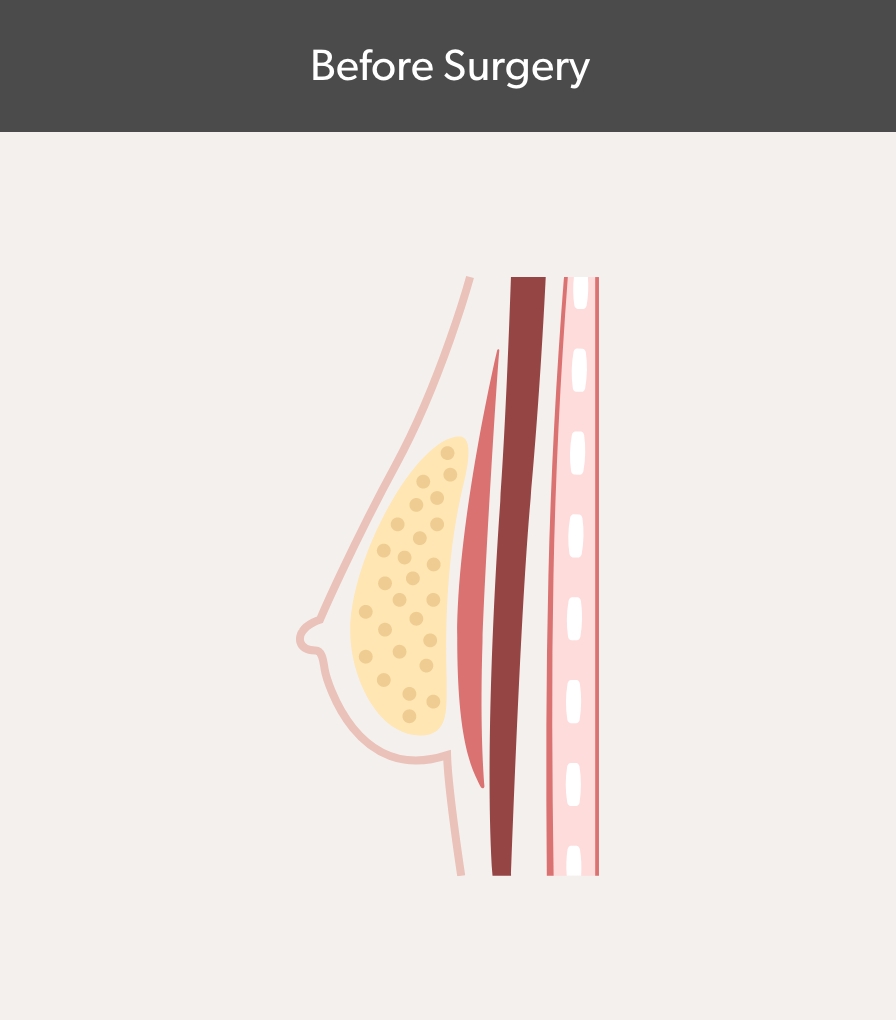
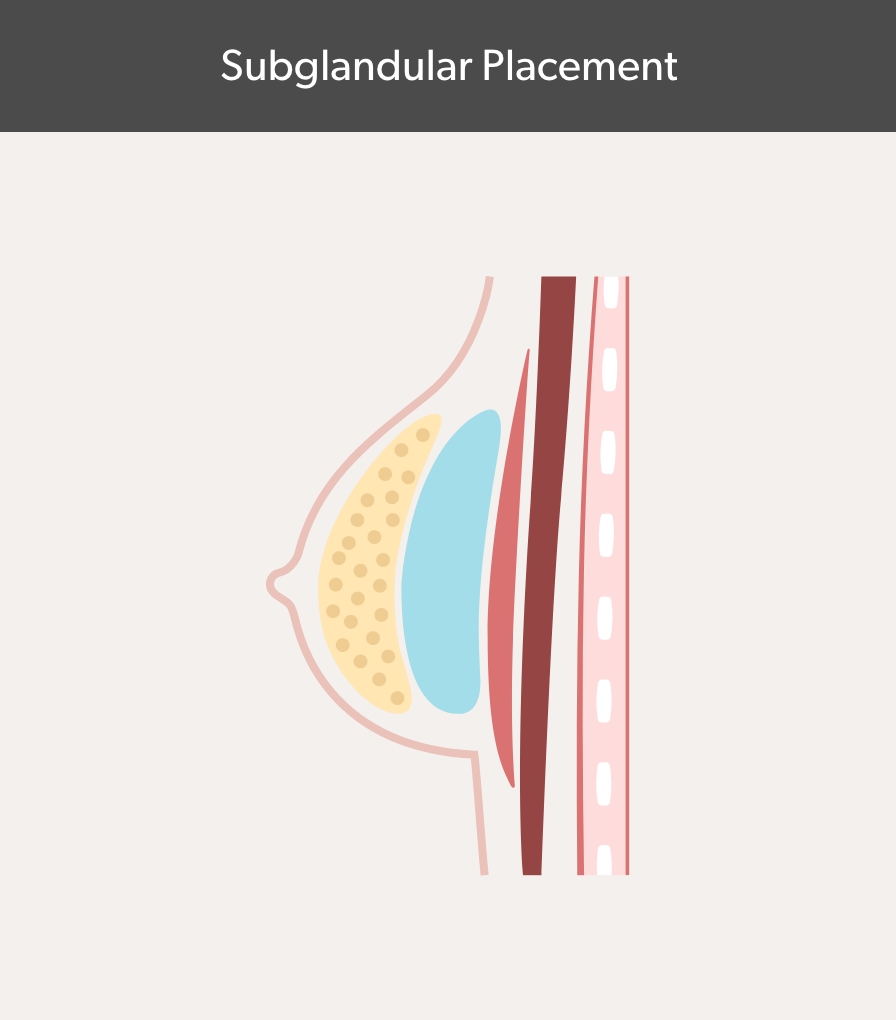
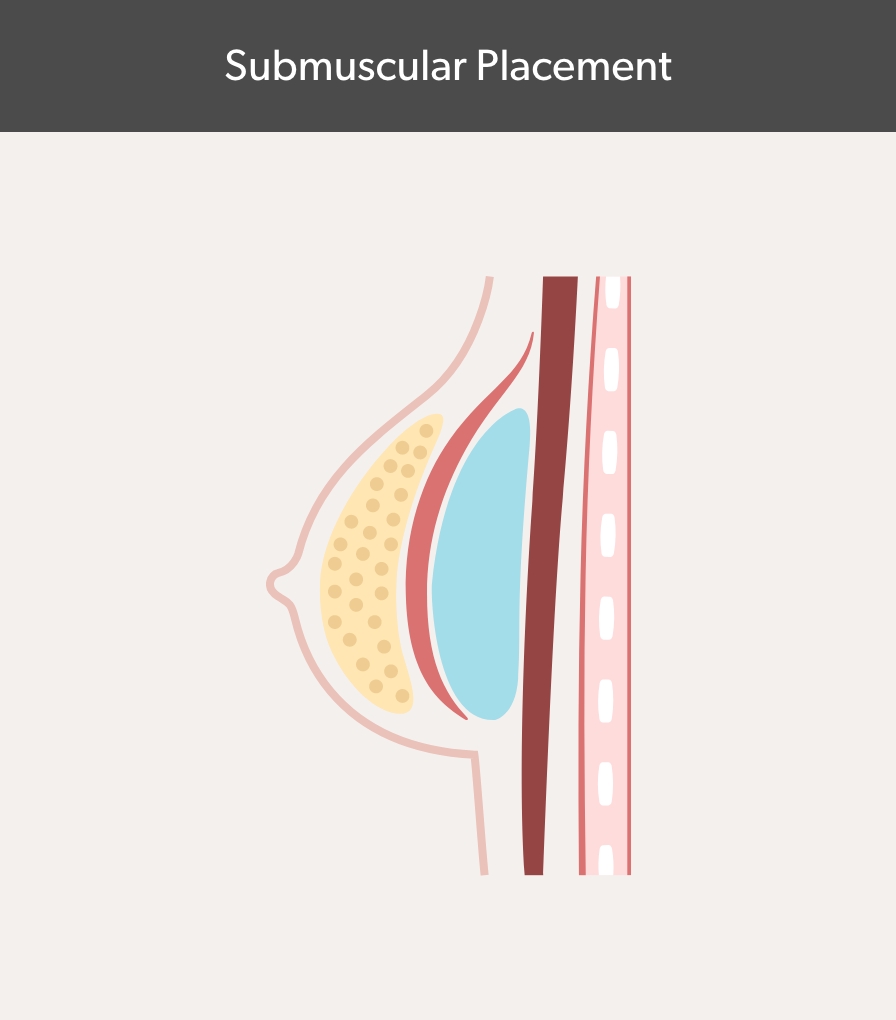
Implants can be placed over or under the chest muscle (subglandular or submuscular), depending on your current breast volume, the quality of your breast skin, and other factors.
Breast Implant Placement Options
Implant Placement Comparison
Consideration
Subglandular
Submuscular
Dual-plane
Implant placed
In front of the chest muscle
Behind the chest muscles
Upper portion behind the chest muscle (submuscular); lower portion on top of the chest muscle (subglandular)
Patients with sufficient natural breast tissue to hide the implant border
Patients of all types
Patients who want the most natural look
“I am 2 weeks post- op from a breast augmentation with lift and galaflex internal bra done by Dr. Amalfi. There are truly no words I can put together to explain how happy, and grateful I am. From the first appointment, leading up to the day of surgery, I was and still am blown away by the expertise and care everyone at the Quatela Center has shown. Each appointment I left feeling so confident in the decisions made, and beyond excited! Dr. Amalfi is not only incredibly talented, but also so kind, along with everyone who works by her side. I will forever be grateful to her, her team, and the Quatela Center for restoring my confidence after having my two babies. Thank you SO much!!!!!”
Eliza Quinn Google
“Dr.Amalfi did my breast augmentation and I couldn't be more happy with the results! Dr.Amalfi and her staff are so sweet and make you feel so comfortable. Recovery was very easy. The first 2 days hurt but other than that very minimal pain. I already feel so much more confident and happy in my body. Couldn't thank Dr. Amalfi and staff enough for such an amazing experience ❤️”
Savannah Worboys Google
“I saw Dr.Koenig for a breast augmentation I was very nervous but dr.Koenig and his entire staff were so sweet and caring, they all helped out and checked in to make sure I was doing okay before and after surgery! I can’t thank dr.Koenig enough for giving me my confidence back I can truly say I love my body now(:”
Briana Goodwin Google
Your Breast Augmentation Procedure
Dr. Amalfi and Dr. Krasniak perform breast augmentation as an outpatient procedure at our private, onsite, accredited surgery center. While you will be released to go home on the day of surgery, you can choose to spend the night under medical supervision at our on-site Carriage House.
Once you are resting comfortably under general anesthesia, your surgeon makes an incision along the crease under each breast (inframammary placement) and creates a space, called a pocket, for each implant according to your surgical plan. Our surgeons use the inframammary incision technique because it gives them direct access to the surgical area and hides the resulting scar. The surgeon prepares the pocket and inserts each implant using a Keller Funnel® device for a safer, “no-touch” technique. When the surgeon achieves the desired breast size and shape, they insert a long-lasting local anesthetic and carefully suture the incisions closed.
Breast Augmentation Recovery Timeline
While experiences vary, most breast augmentation patients recover along the following general timeline:
Day of surgery:
Return home in the care of an adult friend or family member. Long-acting local anesthetic will keep you comfortable for the first few days.
3 to 5 days
Return to work, school, and nonstrenuous activities. Swelling peaks.
5 to 7 days
Sensitivity of the nipples and incision sites subsides.
4 weeks:
Swelling fades.
6 weeks:
Resume high-impact activities without restriction.
3 to 6 months
Implants soften and ease into a natural position. Final results achieved.
6 to 12+ months:
Scars fade.
It’s important to listen to your physician pre-operatively and post-operatively; she/he has your best interests in mind throughout the recovery process.
Tips for a Better Breast Augmentation Recovery
Take short walks during the first 24 hours to increase circulation and prevent blood clots.
Minimize swelling by keeping your upper body elevated at all times.
Do not consume alcohol for 1 week after surgery or while taking narcotic pain medication.
Relieve nipple sensitivity by covering them with Band-Aids or pasties for the first few weeks.
Refrain from any uncomfortable arm or upper body movements.
Stay out of swimming pools, hot tubs, and other bodies of water for at least 2 weeks after surgery.
How Much Does Breast Augmentation Cost in Rochester, NY?
The cost of breast augmentation with implants in the Rochester, Buffalo, or Syracuse, New York, area varies, depending on your choice of implants and your specific needs and goals. After you consult with one of our exceptional plastic surgeons, you will receive an all-inclusive price quote that covers pre- and post-operative appointments, surgeon’s fees, surgery center fees, and anesthesia costs. For more information, see our page on Plastic Surgery Costs.
Complementary Procedures
For optimal improvement with a single surgery and recovery period, women often combine breast augmentation with other procedures, including:
Combines breast and body procedures to reverse changes caused by pregnancy, breastfeeding, and weight changes.
If you are ready to meet with one of our breast and body specialists, request a consultation online, or call us at
(585) 244-1000 to schedule your appointment.
Breast Augmentation FAQ
How painful is breast augmentation recovery?
There is very little pain associated with breast augmentation because of the refined, advanced techniques used by our surgeons. Their overall goal is to have no real downtime; most patients are surprised by how comfortable they are with minimal medication. In most cases, any discomfort is well controlled through appropriately prescribed pain medications.
How long do I have to wear the surgical bra after breast augmentation?
Post-surgical bra recommendations vary with the specifics of the surgery and the patient’s needs. In general:
If you do not have a bra on after surgery, you don’t need one. You may wear a sports bra or a camisole with a shelf bra if that makes you more comfortable.
If you have a bra on after surgery, you should wear it at all times for 3 weeks. You may continue wearing the same bra or switch to a sports bra of your choice.
Do not wear a bra with underwires or push-up pads until cleared by your doctor. We suggest wearing bras that zip up or clasp in the front because they are easy to put on and remove during early recovery.
How can I improve scarring after breast augmentation surgery?
While excessive scarring is uncommon, your surgeon will discuss your options for scar treatments. Keeping your incisions out of the sun for at least a year after breast implant surgery will decrease the potential for hyperpigmentation (redness).
What is natural breast augmentation?
Natural breast augmentation enlarges the breasts using the patient’s own body fat. This fat is collected with liposuction, purified, and injected into the breasts to add volume. This procedure, also called breast augmentation with fat transfer, provides a subtle change in breast size of about 1 cup size. Fat transfer can also be used to fill out and shape the upper breast and cleavage when combined with implants.
Do I need to have my breast implants replaced every 10 years?
No medical device is considered permanent; however, breast implants do not need to be replaced every 10 years. If you are pleased with your implants and not experiencing any issues, we do not recommend replacing them. Each Natrelle implant is covered individually in the case of rupture or deflation and carries a lifetime warranty. If this occurs within the first 10 years after surgery, the manufacturer may offer financial assistance to have them replaced.
How common are complications with breast augmentation?
The national average for breast augmentation complications is 15%; at the Quatela Center, it is significantly lower. Possible short-term complications include bleeding, infection, and problems with anesthesia. Possible long-term complications include capsular contracture (may be affected by implant placement) and breast implant illness (BII). During your consultation, your surgeon will talk with you about the risk of complications and ways to prevent them.
When considering breast surgery, there are many benefits and risks to think about. The following documents are provided by the manufacturers of breast implants for patient education in accordance with the FDA. This information should be reviewed prior to your consultation. Our doctors are up-to-date in their knowledge about the science and safety of breast implants, and they will review these documents with you and answer any and all of your questions at your consultation.
How will breast augmentation surgery affect breastfeeding?
Our surgeons will not perform breast augmentation if you are currently pregnant, breastfeeding, or lactating. We recommend waiting 6 months after you stop breastfeeding before having a breast procedure. Breastfeeding can typically be done after breast augmentation as the production of milk is not compromised. Sometimes patients experience the loss of sensation in the nipples, in which case breastfeeding can be affected.
What if I want to remove my breast implants later on?
Dr. Amalfi and Dr. Krasniak perform a type of revision breast surgery called explant surgery to remove breast implants without replacing them. They may recommend a breast lift as well to improve breast shape without implants.
Model
Surgical Destination
We’re Worth The Trip!
As a destination practice offering world-class care, the Quatela Center attracts patients from around the globe. Our virtual consultations and support program take the effort out of travelling for surgery.