- What do I look like when I wake up from rhinoplasty surgery?
- How long will bruising and swelling last after rhinoplasty surgery?
- Can I do anything to prevent bruising?
- What does it feel like when I wake up from rhinoplasty surgery?
- Tell me more about the nasal packing.
- What's a drip pad?
- Why do I have tearing after rhinoplasty surgery?
- When can I blow my nose after rhinoplasty surgery?
- When I'm awake enough, can I drive myself home?
- Does someone have to stay overnight with me after rhinoplasty surgery?
- Are there any dietary restrictions following rhinoplasty surgery?
- Will I need any special prescriptions following rhinoplasty surgery?
- When do I start taking these prescriptions?
- When can I shower after rhinoplasty?
- What if my cast falls off?
- When is my first postoperative rhinoplasty appointment?
- Are there any instructions about routine daily activities?
- When will I look normal?
- How long does healing take?
- Can I wear my glasses or contacts after rhinoplasty?
- How can I learn more about rhinoplasty?
RHINOPLASTY
1) Can you make my nose look like the one in this photo?
Photos help the plastic surgeon to better understand what it is you like and don't like - both about the nose you have now and the way you would like your nose to look after rhinoplasty. For that reason, photos can be useful as a place to begin a discussion. However, a cosmetic surgeon can not put someone else's nose on your face. Plastic surgeons can only make certain changes to the nose you already have. A good plastic surgeon with board certification will a) consider what you are trying to accomplish, b) qualify what is possible and c) qualify what is not possible, and d) add his recommendations based on his knowledge and experience. The discussion should lead to an agreement of what you both see as a realistic expectation from rhinoplasty surgery. At this point, if the recommendations and expectations your plastic surgeon discusses seem reasonable to you, ask to see some Before and After Photos to evaluate his work. By all means if you feel your plastic surgeon doesn't understand or isn't listening to you, this is a good time to interview another cosmetic surgeon. Selecting the board certified plastic surgeon that is right for you is a process. Once again, listening is the key to a successful rhinoplasty and a satisfied patient.
2) My nose sticks out too far. Can you fix that?
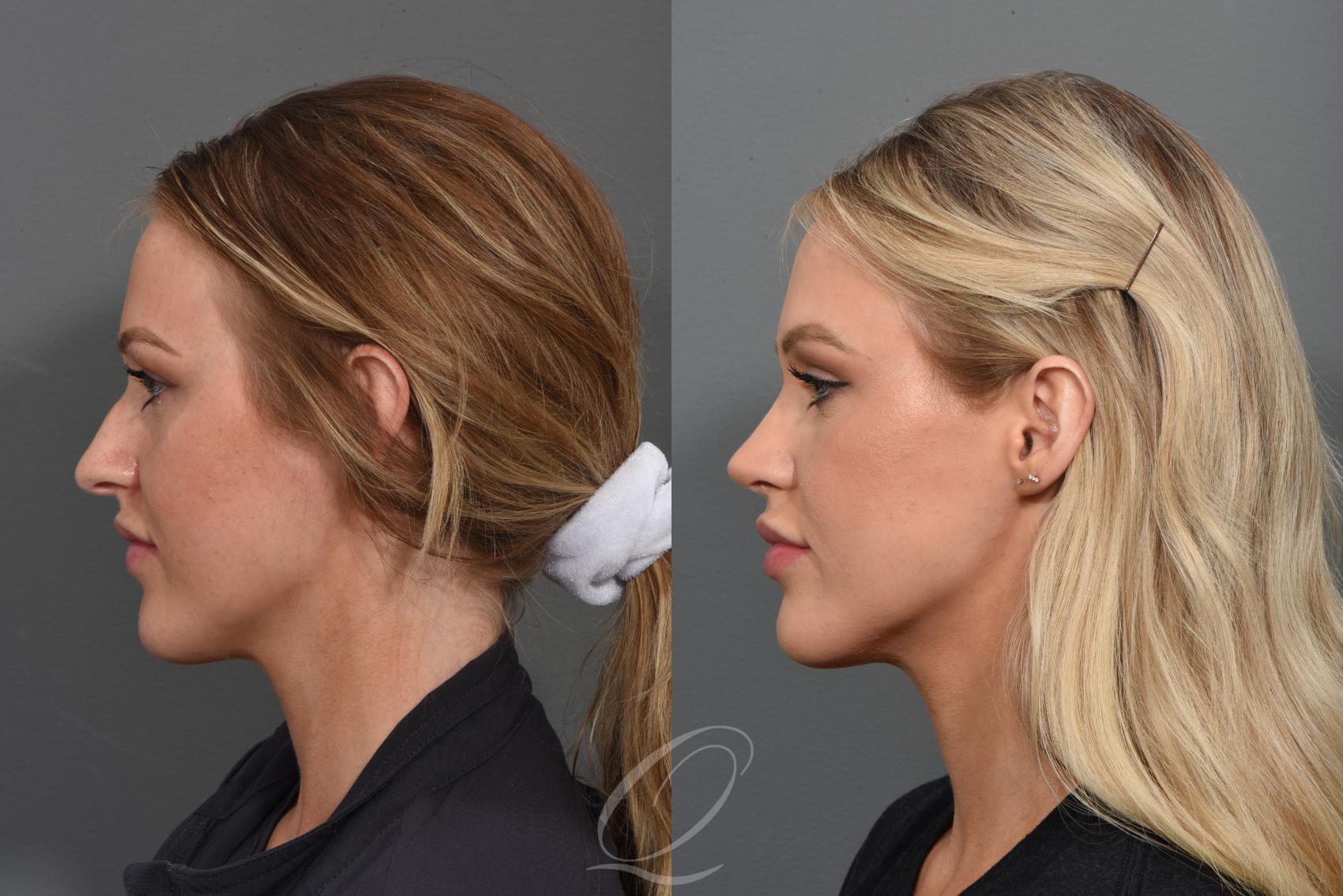
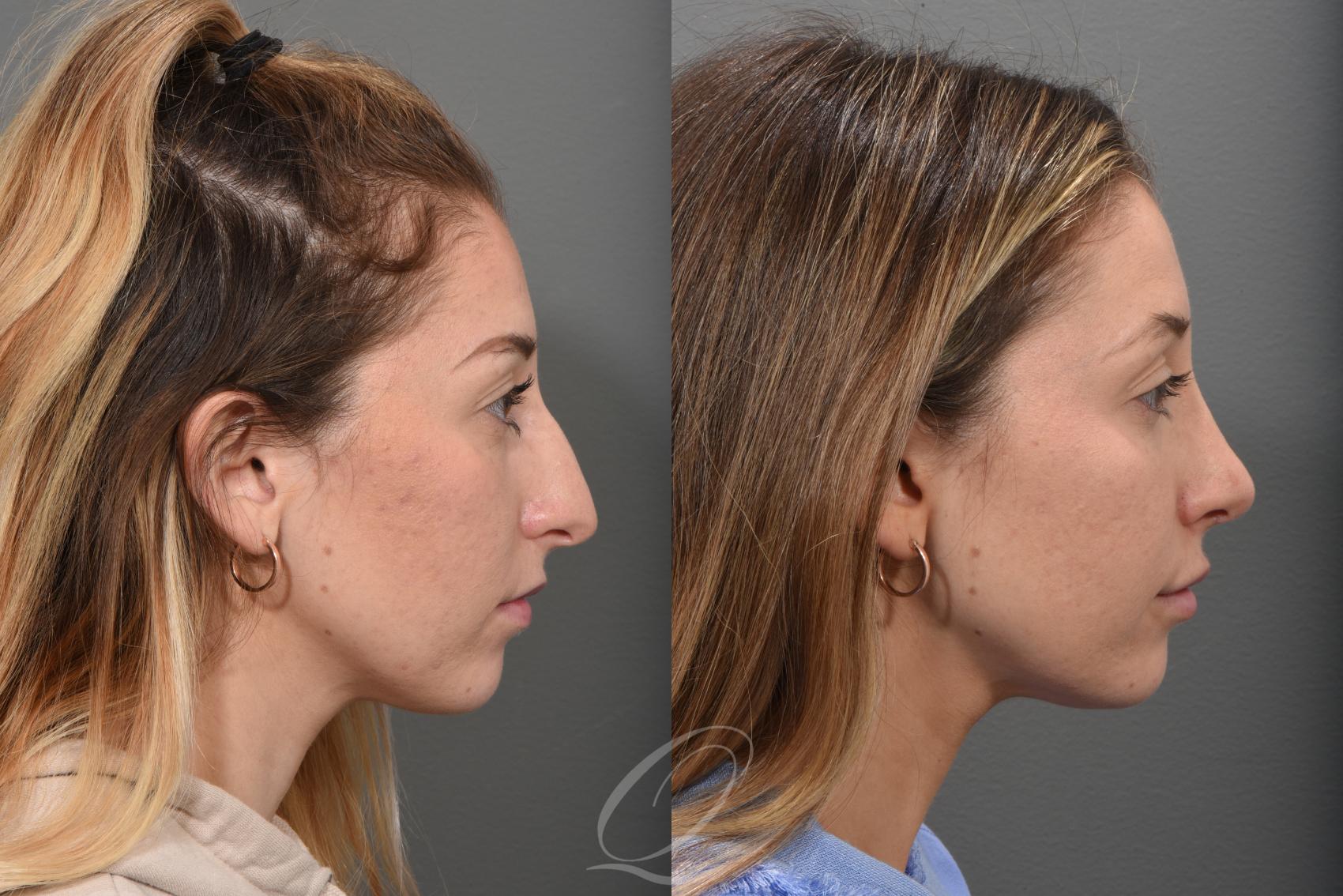
What you are describing is the projection of the nose. Take a moment to look at our before and after photos that demonstrates the improvements accomplished by changing the nasal projection. Another term you will here is projection of the nasal tip. The nose tip droops as we age. Many patients who request rejuvenation procedures are surprised to learn that by rotating the nasal tip slightly upwards, the nose regains a younger appearance.
3) How do you remove the bump in my nose?
First, when patients ask about a bump or hump in their nose, they are most often referring to the nasal bridge - the part of the nose that creates the profile seen from a side view of the nose. Plastic surgeons refer to the bridge of the nose as the dorsum and a hump is referred to as a dorsal hump. To reduce the size of this, a rasp (like a nail file or emery board) can be used to shave off and smooth down excess bone. Nasal skin is very accepting of this change and will drape or adhere well to the new shape.
4) When my nose is made smaller, what happens to the extra skin?
Nasal skin has elasticity so it adheres to the new shape of the nose.
5) My nose is too close to my face. Can you fix that?
Plastic surgeons sometimes use a term "saddle nose" deformity - where the middle of the nose is too close to the face. A low bridge can be traumatic (from an accidental blow to the nose), the result of a disease process or congenital (from birth as seen in Asian noses).
One of the best ways to explain the process of repairing a low bridge is to begin with a look at Before and After Photos. Building up the dorsum of the nose can be accomplished in many ways. Each approach has advantages and disadvantages.
One repair option is to borrow cartilage from the patient's nasal septum, ear or rib. One obvious advantage of cartilage is that it does not introduce something foreign into the patient's body. A disadvantage for ear or rib cartilage is the need for a separate incision. Depending on the amount of cartilage needed, there may not be enough nasal cartilage to accomplish the task.
When trying to build up a bridge that was lowered too close to the face, there is often not enough available cartilage left in the nose from the previous rhinoplasty surgery. Cartilage can be difficult to carve into the right size and shape and can have rough edges that can show through the skin of the nose.
There are many artificial materials that are safe to use in the nose. Gortex®, a material that has been used successfully for years in heart surgery to replace valves, is soft, pliable and smooth under the nasal skin.
Again, ask review Before and After Photos and talk to patients who have undergone rhinoplasty surgery for this same concern. By all means voice your concerns but allow the final decision on how best to augment the nasal bridge to be up to the plastic surgeon.
6) My nose is too long/I have a droopy nose. Can it be shorter?
The profile line from between the eyes to the tip of the nose gives us the length of the nose. In our before-and-after rhinoplasty photographs, we demonstrate how shortening a nose that is too long brings it into proportion with the rest of the nasal features. As we age, the nasal tip loses support and drops. Using a cartilage graft to support the nasal tip, we create a more youthful appearance.
7) My nose is too wide. How do you fix that?
Many factors contribute to the width of the nose including the distance between the nasal bones, cartilage in the tip of the nose that is too wide and the thickness of the nasal skin, particularly at the tip of the nose. If the nose is too narrow or the nasal tip is turned up too much, the result doesn't look natural. Our before and after photos demonstrate how narrowing the nose makes it naturally more elegant.
8) Why is a chin implant sometimes recommended with rhinoplasty?
It's all about balance. Facial features in good proportion are perceived as beautiful. Chin augmentation readjusts overall facial proportions. In some cases, it is possible to reduce the appearance of the size of the nose just by adding the chin implant for balance. If neck liposuction is requested this can be performed through the same small incision used for the chin implant.
9) Will I still look like "me" after rhinoplasty surgery?
Many of our patients report that, upon return to work and routine daily activities, friends and acquaintances make the following remarks: "Gee you look great. Did you change your hairstyle?" or "Have you been on vacation?" Retaining your uniqueness is the sign of a successful rhinoplasty procedure. Although the change may be significant to you, it's not uncommon that friends and family don't really notice the specific changes. Before and After Photos
10) Yes, but I want to dramatically change the appearance of my nose. Can I do that?
This is an excellent question because it leads to evaluating realistic expectations. This question can only be answered on an individual basis. A sign of a good facial plastic surgeon is one who can tell the difference between realistic and unrealistic expectations and one who will be truthful about meeting each patient's desires. Our biggest referral source is from satisfied patients - ones who have had realistic expectations and were satisfied with results.
11) Will I have any incisions in my skin?
Most likely. See the illustration for placement of incisions in the column that supports the tip of your nose. This is called Open Rhinoplasty. These incisions heal very well and most patients and family members will not notice them after a few weeks.
When a patient wants the base of the nose narrowed, tiny incisions called Weir incisions are made in the outer rim (ala) very close to the junction of the nose to the face. Surprisingly, these incisions heal very well and are often imperceptible to others.
12) What's the difference between open rhinoplasty and closed rhinoplasty?
In an "open" rhinoplasty, a small V-shaped skin incision is made in the post that divides the two nostrils so the skin can be lifted up off the tip of the nose. This allows the facial plastic surgeon to work on the nasal tip cartilage in their natural position and see what needs to be done. It also allows better access to evaluate and correct asymmetry, projection (how far the nose sticks out from the face), overall length, a hump and how straight the nose is.
In closed rhinoplasty there is no external skin incision. Some plastic surgeons prefer closed rhinoplasty and can achieve excellent results. We prefer open rhinoplasty most of the time because an incision that heals extremely well is an acceptable trade off for the benefits of increased access and visualization.
In both open and closed rhinoplasty, incisions are made inside the nose to access the bone and cartilage framework. In our Rhinoplasty Before and After Photos notice the views showing the base of the nose. These show how well the external skin incision heals.
13) What if I have a history of bad scars?
If you have pierced ears, the way you healed there is a good indication of how you will heal from your rhinoplasty surgery. Scars on the rest of the body typically are not an indication for how patients heal following facial plastic surgery. At the time of your consultation, it's important to show your plastic surgeon any previous scars that are of concern so he can give you a realistic assessment of your healing potential following facial plastic surgery.
14) Is rhinoplasty surgery painful?
After any surgical cosmetic procedure, some discomfort can be expected. All patients are provided with prescriptions for pain medication. Patients sometimes use the prescription medication two to three days after their rhinoplasty surgery and then switch to acetaminophen. It is uncommon for patients to report unmanageable pain after their rhinoplasty surgery. Numbness behind the two front teeth is common and temporary.
15) When can I go back to work after rhinoplasty surgery?
Most patients take one week off work but others prefer two weeks. The cast on the nose comes off one week postoperatively. At that time, any residual bruising and swelling can be camouflaged with make-up. Patients who are more concerned with privacy prefer two weeks off work after their rhinoplasty surgery.
16) How long does the rhinoplasty surgery take?
The length of rhinoplasty surgery depends on several factors including the complexity of each person's nose. Many patients who have previously had a rhinoplasty are referred to the Quatela Center for Plastic Surgery for revision rhinoplasty surgery. Revision rhinoplasty is more difficult than primary rhinoplasty and can take a little longer because of corrections that need to be made as a result of the initial plastic surgery.
17) When can I "work out?"
Aerobic activities should be avoided for two weeks following rhinoplasty surgery and heavy weight lifting or more strenuous workouts should be avoided for three weeks postoperatively. It's important to avoid bending, lifting or straining during the postoperative rhinoplasty period as these activities can increase swelling and delay healing.
18) Can I drive myself home after rhinoplasty surgery?
NO. Because of the effects of anesthesia, patients are not able to drive themselves home after the rhinoplasty surgery. If you are from out of town and transportation is an issue, you may want to consider the accommodations at Carriage House located next door to the Surgery Center.
19) I'm from out of town. Where can I stay overnight in Rochester, NY?
Accommodations are comfortable and convenient for Lindsay House clients. The Strathallen, located "just down the street" provides upscale, affordable accommodations for Lindsay House visitors. For added convenience following plastic surgery, some patients elect to stay in our Carriage House, located adjacent to the Lindsay House. For guests without the benefit of family or friends in the Rochester New York area, our staff will be happy to assist you with arrangements for a smooth, restful experience following your rhinoplasty procedures.
20) How long should I stay in Rochester following rhinoplasty surgery?
Most patients stay in Rochester about seven to ten days following rhinoplasty surgery. After that it's ok to fly or travel long distances.
21) How old do I have to be to have a rhinoplasty?
Rhinoplasty should be performed only after nasal development is complete - for most patients this means after puberty. In general, plastic surgeons do not like to perform cosmetic rhinoplasty until a patient is about 16. Along with being more physically developed, a patient under 16 may change their concept of beauty as they mature. A patient needs to be mature enough to participate fully in the decision-making process as well as comprehend fully the procedure itself.
22) I don't like my rhinoplasty result. When can I have revision rhinoplasty?
It is vital that patients wait one full year before undergoing revision rhinoplasty. First of all, final results of rhinoplasty are not evaluated until one full year postoperatively. It takes a year for postoperative swelling to subside and healing to be complete. Changes, however subtle, continue throughout the 12-month course following rhinoplasty. As time goes by, the nose gradually looks different. Features refine as the swelling resolves. These refinements sometimes are enough for a result to be deemed acceptable.
A second consideration is scar formation. Revision rhinoplasty is challenging enough without battling through scar tissue that has not matured. Scar tissue is somewhat more compliant in the hands of the plastic surgeon when it has been allowed to soften over time. Even after a year the presence of scar tissue makes revision rhinoplasty surgery more complex.
Circumstances advocating revision rhinoplasty at less than one year after the primary (first) rhinoplasty are almost nonexistent. If a plastic surgeon recommends revision rhinoplasty at less than one year, at the very least obtain a second opinion. Give your nose every possible opportunity to "settle" and refine before undergoing another rhinoplasty surgery.
23) Why is a revision (secondary) rhinoplasty so much more difficult than a first-time (primary) rhinoplasty?
Many reasons. First, after any cosmetic surgery, scar formation creates a thick, tough layer that is more difficult to work with than original tissue. Second, the original location of (anatomical) landmarks have been altered. Third, cartilage needed to reshape the nose, which was available for use during a primary rhinoplasty, is no longer available to the surgeon performing revision rhinoplasty. Cartilage grafts borrowed from the ear or other parts of the body (as previously discussed) require a second incision. If artificial material is used in revision rhinoplasty, experience selecting and working with artificial material requires advanced skill level. Fourth, the overall skill level required to perform a successful revision rhinoplasty is greater. Revision rhinoplasty has humbled even the most experienced facial plastic surgeons. Before and After Photos
24) What's the septum?
The septum is the internal divider of the nose made up of two components: 1) septal cartilage - the mobile, lower part of nose closer to lips, and 2) bony septum - the immobile upper portion of nose closer to eyes.
25) What is a septal perforation?
The nose is divided by the septum, a wall made of cartilage and bone that separates the right side of the nose from the left. A perforation is a hole or opening. Septal perforation is a hole in the septum. Trauma (whether from an accident or repeated nose picking) and nasal surgery are the most common causes of septal perforations but other causes include cocaine drug abuse.
Location and size of a septal perforation makes a big difference. If a septal perforation is small and posterior (close to the face), often times it causes no problems and a patient may even be unaware they have a septal perforation. If a septal perforation is anterior (towards the tip of the nose), air passing through the opening can make a distracting whistling sound. Because airflow is disturbed by the communication between the two sides of the nose, patients complain of nasal airway obstruction. Septal perforations can result in chronic crusting which compounds airway obstruction and creates a maintenance problem. Patients with septal perforations must keep edges of the nose lubricated so they don't dry out and bleed.
From a cosmetic standpoint, a septal perforation can spell trouble. If a septal perforation is large enough, bridge (profile line) support is lost, creating a weakened area in the nose that can collapse. This can result in a "dent" in the profile.
Septal perforation repair is challenging - even for an experienced plastic surgeon. If a septal perforation creates any of the problems discussed above, the perforation should assessed for repair prior to rhinoplasty.
26) What is possible from a revision rhinoplasty?
Nowhere in cosmetic surgery is communication more important than in revision rhinoplasty. It is essential to understand precisely what can and cannot be accomplished from revision rhinoplasty surgery. Few plastic surgeons are expert at rhinoplasty. Only facial plastic surgeons with advanced rhinoplasty skill and experience are qualified for revision rhinoplasty procedures. Before and After Rhinoplasty Photos
When a facial plastic surgeon evaluates a patient for revision rhinoplasty, many factors are taken into account - not the least of which: whether the result the patient seeks is possible with revision rhinoplasty. To answer that question the plastic surgeon will take the following into consideration:
- Projection (how far the nose sticks out from the face)
Opportunity for correction exists if no significant alteration was made to nasal tip cartilage during primary rhinoplasty
Length (the length of the profile line from between the eyes to the tip of the nose)
Opportunity for correction exists if no significant alteration was made to nasal tip cartilage during primary rhinoplasty
Persistent dorsal hump
Evaluate opportunity to shave down dorsal hump
Bridge too low to face (over-correction of dorsal hump)
Evaluate opportunity for correction with cartilage or artificial graft
Nose too wide
Evaluate opportunity for correction by narrowing nasal bones, narrowing nasal tip
cartilage, removing excessive scar tissue and evaluate nasal tip skin thickness
Risk-benefit ration
Is the improvement worth the risk? For example, will a significant improvement from the primary rhinoplasty be lost in the revision? Is it worth the trade off?
Patient motivation
For example, the primary rhinoplasty result is acceptable and the patient is following this year's latest "fad"?
Is the patient motivated to deal with the prolonged swelling that often accompanies revision rhinoplasty?
It is critical that the plastic surgeon present a realistic picture of the benefits and limitations of revision rhinoplasty. For patients with realistic expectations, even the most subtle improvements can make all the difference in the world.
27) Will I be awake during rhinoplasty surgery?
Using IV sedation (medicine administered through an IV) and local anesthesia (numbing medication administered in the surgical area), patients are asleep during rhinoplasty surgery. Patients do not hear or feel anything and are comfortable during their rhinoplasty surgery. Patients wake up very soon after the surgery is completed. Intravenous sedation is a type of anesthetic; therefore all patients must have a responsible adult to stay with them through the night following rhinoplasty surgery.
28) Can I have a face lift or brow lift at the same time as rhinoplasty?
Plastic surgery such as a browlift to address frown lines between the eyes, facelift to address a "turkey wattle" neck, blepharoplasty to remove "bags" of excess fat and skin around the eyes, and skin resurfacing such as a chemical peel to improve fine wrinkles can all be performed at the time of rhinoplasty.
29) I really want to do this but I'm nervous. What if I get stressed?
It's ok to be nervous. (Frankly, we would be nervous if you were taking this step lightly!) One of the best ways to deal with nervousness is to see what other patients have gone through. Before and After Rhinoplasty Photos present results and experiences of patients who have been in the same position you are right now. Your Consultation gives you an idea of questions that other patients have asked as part of their decision-making process.
RHINOPLASTY PREOPERATIVE INSTRUCTIONS
1) What do I do to prepare for rhinoplasty surgery?
Although the preparation for your operation is pretty simple, it is an essential element in a successful outcome. To prepare for rhinoplasty surgery, a preoperative appointment will be scheduled with one of our experienced nurses.
2) What happens at the preoperative rhinoplasty appointment?
Many things! To name a few, you will meet with our nurses to review your health history, answer your questions, instruct you on how to prepare for rhinoplasty surgery, receive the prescriptions for use after surgery and tell you what to expect. Most of the instructions are listed here. This list of questions, however, will not take the place of a preoperative rhinoplasty visit, which is essential in determining a patient's understanding and readiness for surgery. We will be sure you are signing for informed consent.
3) What does informed consent mean?
Informed consent means you have an excellent understanding about the benefits of your plastic surgery as well as any risks, and all the preoperative and postoperative information. You are making an "informed" decision as to whether rhinoplasty surgery is right for you.
4) What are the risks of the rhinoplasty procedure?
As part of your initial consultation, your plastic surgeon will review your expectations for rhinoplasty surgery. At that time, he can provide a realistic picture of what surgery can and cannot accomplish. We will provide you with a written list of any risks reported in the medical literature associated with any procedures you are considering. Although risks from cosmetic surgery are uncommon, every patient should be fully informed of every risk associated with surgery.
5) What are some of the other things to do to prepare for rhinoplasty surgery?
We review your health history and any daily medications you may be taking. Because tobacco abuse impedes wound healing, you will be asked to stop for two weeks before rhinoplasty surgery and two weeks following surgery. Our nurses will be happy to discuss over-the-counter aids to help you with this.
6) What about my daily medications before rhinoplasty surgery?
You will have a preoperative appointment well in advance of your cosmetic surgery when our experienced staff will review all medications with you. If you are on "blood thinners," you will be asked to stop them approximately one week before rhinoplasty surgery. We will provide a "Medication List" for instructions on medications and supplements prior to plastic surgery.
7) I take vitamins and supplements. Do I need to stop them before rhinoplasty surgery?
Most vitamins and supplements have few side effects. However, there are some such as vitamin E and ginkgo-biloba that can affect bleeding during rhinoplasty surgery. We will provide a "medication list" that will provide more details. It is also imperative
8) Do I need any special prescriptions before rhinoplasty surgery?
Most patients do not need any special prescriptions before rhinoplasty surgery. Please let us know of any special medical concerns you may have. We do ask you to start Vitamin C, which promotes wound healing, one week before rhinoplasty surgery. We also ask you to start Arnica, a natural herb that significantly decreases bruising, the day before rhinoplasty surgery. Medications used after your nasal surgery are discussed below. You will be asked not to eat or drink anything after midnight the night before rhinoplasty surgery.
9) Why will I be asked not to eat or drink anything after midnight before the rhinoplasty procedure?
Anesthesia medications can cause stomach upset. The best way to prevent after effects from anesthesia will be to avoid food or drink from midnight the night before your rhinoplasty surgery. For patients with special concerns, such as a patient with diabetes, our anesthesia team will be happy to address special arrangements with you ahead of time.
10) What kind of anesthesia will I have?
Using IV sedation (medicine administered through an IV) and local anesthesia (numbing medication administered in the surgical area), patients are asleep during rhinoplasty surgery. Patients do not hear or feel anything and are comfortable while in the operating room. Patients wake up very soon after the rhinoplasty surgery is completed. Intravenous sedation is a type of anesthesia; therefore all patients must have a responsible adult to stay with them through the night following rhinoplasty surgery. Patients may not drive for 24 hours after their plastic surgery procedure and this time may be longer, depending on the procedure.
11) What happens when I check in for rhinoplasty surgery?
Our nurses will help you get ready for rhinoplasty surgery. Please let them know of any special needs you may have. Also, be assured that you have plenty of time for any last minute questions with your facial plastic surgeon.
12) Does someone have to stay while I have my rhinoplasty surgery?
No one needs to stay at the Lindsay House during your rhinoplasty surgery. However, you must have someone available by telephone at all times during your plastic surgery.
13) I'm concerned about privacy.
During a recent independent study, privacy was found to be one of the advantages that attracted people most to the Quatela Center for Plastic Surgery. Because all consultations, office visits, surgical and nonsurgical experiences take place at the same address, the check-in process is completely confidential.
14) What other instructions are there?
Glad you asked! See the postoperative rhinoplasty instructions below.
RHINOPLASTY POSTOPERATIVE INSTRUCTIONS
1) What do I look like when I wake up from rhinoplasty surgery?
Following the procedure, you will have a cast on your nose with a drip pad under your nose to collect the mucous drainage. Your nose will be swollen. You may have some bruising under your eyes, however, this typically is more pronounced 24-48 hours after the rhinoplasty procedure.
2) How long will bruising and swelling last?
For most patients, bruising and swelling lasts about a week. If you bruise easily, it could last up to two weeks after rhinoplasty surgery, however, this is uncommon.
3) Can I do anything to prevent bruising after rhinoplasty surgery?
Most patients will have a little bruising. We can minimize bruising by using Arnica before and after the rhinoplasty procedure. Arnica is a natural "herb" that helps prevent bruising.
4) What does it feel like when I wake up from rhinoplasty surgery?
Your nose will be stuffy - like having a bad head cold - and you may experience a headache. We will make sure you are not nauseated or queasy. Our nurses will be right there with you as you wake up from rhinoplasty surgery to give you special attention. You may notice numbness on the roof of the mouth or behind the two front teeth. This will resolve with time.
5) Tell me more about the nasal packing.
After rhinoplasty surgery your nose will be packed with soft nasal packing. There will be soft silastic splints along each side of your septum (divider of the inside of the nose) and a cast on the outside of your nose. The nasal packing will prevent breathing through your nose so you will have to breathe through your mouth. Your mouth will become very dry. Drinks at the bedside along with a humidifier (cool or warm) may help.
6) What's a drip pad?
Following rhinoplasty surgery, soft gauze dressing is placed under your nose to contain draining red-tinged mucous. This drainage through your packs onto your drip pad is normal. Following your rhinoplasty procedure the nurses will teach you how to change the drip pad, which you will need for about 24-48 hours.
7) Why do I have tearing after rhinoplasty surgery?
You may notice that tears run down your cheeks. This is due to swelling and will subside during the first week following rhinoplasty surgery.
8) When can I blow my nose after rhinoplasty surgery?
You are not allowed to blow your nose for one week. Avoiding nose blowing minimizes bleeding and swelling following rhinoplasty surgery.
9) When I'm awake enough, can I drive myself home?
No. Someone will need to drive you home after your rhinoplasty surgery and stay with you that evening. Someone will need to drive you back to the Quatela Center for Plastic Surgery the following morning for packing removal.
10) Does someone have to stay overnight with me after rhinoplasty surgery?
Yes. You must arrange ahead of time for a responsible adult to stay with you the first night following rhinoplasty surgery.
11) Are there any dietary restrictions following rhinoplasty surgery?
No. Patients can eat whatever they want. Advance your diet from liquids to soft food to solids as tolerated. Please drink as much fluid as you can which will help you from becoming dehydrated. Also, it's not uncommon to have temporary numbness on the roof of the mouth (palate) behind the front teeth following nasal surgery so you may want to avoid extremely hot beverages immediately following rhinoplasty surgery.
12) Will I need any special prescriptions following rhinoplasty surgery?
Yes. Postoperative prescriptions are provided well in advance of rhinoplasty surgery day so you arrive home completely prepared. Postoperative prescriptions and over-the-counter medications for rhinoplasty patients include the following:
A) An antibiotic (usually Keflex/cephalexin) after surgery to prevent infection.
B) Swelling medication (Medrol Dosepak/methyl prednisolone) to take after surgery to minimize swelling.
C) Pain medication (usually Vicodin/hydrocodone) to minimize any discomfort following rhinoplasty surgery.
Over-the-counter Medications
D) Ointment (Polysporin/bacitracin) to place on the incision and gently in the base of the nostrils.
E) Saline spray to irrigate your nose following rhinoplasty surgery. This will promote wound healing, prevent infection and help with effects of swelling inside the nose.
F) Over the counter Arnica to minimize bruising.
G) Vitamin C for one week following rhinoplasty surgery to promote healing. It is important to continue to avoid aspirin, ibuprofen, Vitamin E, etc. for one week following rhinoplasty surgery to prevent bleeding in the postoperative period.
13) When do I start taking these prescriptions?
Patients take their pain medication as needed. The other medications begin the evening following the rhinoplasty procedure.
14) When can I shower?
The nasal cast must remain dry and in place for one week following rhinoplasty surgery. Therefore, you should not shower until after the cast is removed. You may bathe and wash your hair in the sink any time following the rhinoplasty procedure.
15) What if my cast falls off?
While you are asleep, we warm the material that is used for your cast and gently apply it to your nose. As the cast cools, it takes the shape of your nose so it stays in place. It is very uncommon for a cast to fall off. If it does, just call us and we'll give you specific instructions. You will have a phone number to reach us 24 hours a day.
16) What if I have a lot of bleeding?
It 's not uncommon for patients to be anxious about this. We will teach you ahead of time how much drainage is too much. Our plastic surgeons and staff are available 24 hours a day to see you or just reassure you. If you have too much drainage, most commonly we meet patients in the office to help decrease the bleeding. You will be given the telephone number for our professional answering service if you need to page us for any concern.
17) When is my first postoperative rhinoplasty appointment?
You will be asked to come to the Quatela Center for Plastic Surgery the following day for packing removal. Removal of nasal packing has been described by most patients as discomfort rather than pain. Packing removal will help relieve some of the pressure, however, due to swelling, you will not be able to breathe well through your nose for one week after rhinoplasty surgery.
18) Are there any instructions about routine daily activities?
Sleep with head of the bed elevated or use two to three pillows. Sneeze with your mouth open and do not blow your nose for seven days. Nasal congestion, facial fullness, headache and disrupted sleep are very normal postoperative symptoms and will decrease as the healing process occurs. Absolutely no bending, lifting or straining. If you have little children, bend at the knees or sit on the floor and let them climb on to your lap.
19) When will I look normal?
Most of our patients tell us that they look "normal" at about two weeks after their rhinoplasty surgery. You will still notice swelling and your final result is still a ways off. However, at two weeks you know you are well on the way to recovery.
20) How long does healing take?
Healing from rhinoplasty to evaluate the final result takes one full year. However, after three months, most patients have about 90% of their final result.
21) Can I wear my glasses or contacts after rhinoplasty?
It's best to allow a day or so before using your contact lenses following rhinoplasty. It's not uncommon for patients to tell us that giving their eyes a temporary rest from the contact lenses feels good for the first two to three days following rhinoplasty. It's OK to rest your glasses on the nasal cast. However, one week following rhinoplasty the cast is removed. At that time we will show you how to use the Frame-Ups® to prevent your eyewear from resting directly on your nose. We strongly recommend that you use the frame-ups for postoperative rhinoplasty week #2 - which is the week following cast removal.
22) How can I learn more about rhinoplasty?
Several ways. First Contact Us or call (585) 244-1000 for any questions. If our Patient Care Coordinator can't answer them, she will gladly forward them to the appropriate plastic surgeon or staff member. You can learn more about how to Select A Plastic Surgeon, what happens at Your Consultation: Cosmetic appointment, or more about the training and experience of our Plastic Surgeons & Staff. We look forward to hearing from you!
Rhinoplasty Surgery Before & After Photos
Rhinoplasty Surgery Procedure Information