Abdominoplasty, often called a tummy tuck, can take care of loose abdominal skin and bulges in ways that exercise and mindful eating cannot. Firm, smooth abdominal contours and an attractive, natural-looking belly button require the focused experience and refined talent of a body contouring specialist such as Dr. Ashley Amalfi and Dr. Peter Krasniak. Their attention to safety and exceptional results are the product of decades of collective experience.
Thank You Rochester for Voting Us the Best Plastic Surgery Practice
Quatela Center for Plastic Surgery 973 East Avenue Rochester, NY 14607 Phone: (585) 244-1000 Fax: (585) 271-4786 Monday–Friday: 8:30 a.m.–5 p.m.
Thank You Rochester for Voting Us the Best Plastic Surgery Practice
Tummy Tuck
Abdominoplasty, often called a tummy tuck, can take care of loose abdominal skin and bulges in ways that exercise and mindful eating cannot. Firm, smooth abdominal contours and an attractive, natural-looking belly button require the focused experience and refined talent of a body contouring specialist such as Dr. Ashley Amalfi and Dr. Peter Krasniak. Their attention to safety and exceptional results are the product of decades of collective experience.
While pregnancy and major weight loss are joyful life events, our bodies often don’t look or feel the same again. Lax, hanging skin, separated ab muscles, and a stretched belly button aren’t improved with a commitment to wellness. The team of accomplished plastic surgeons at the Quatela Center includes specialists in body contouring procedures who have helped many people renew their confidence with tummy tuck surgery. Whether you need muscle repair after pregnancy or significant skin removal after weight loss, our team is dedicated to your comfort, safety, and aesthetically pleasing results.
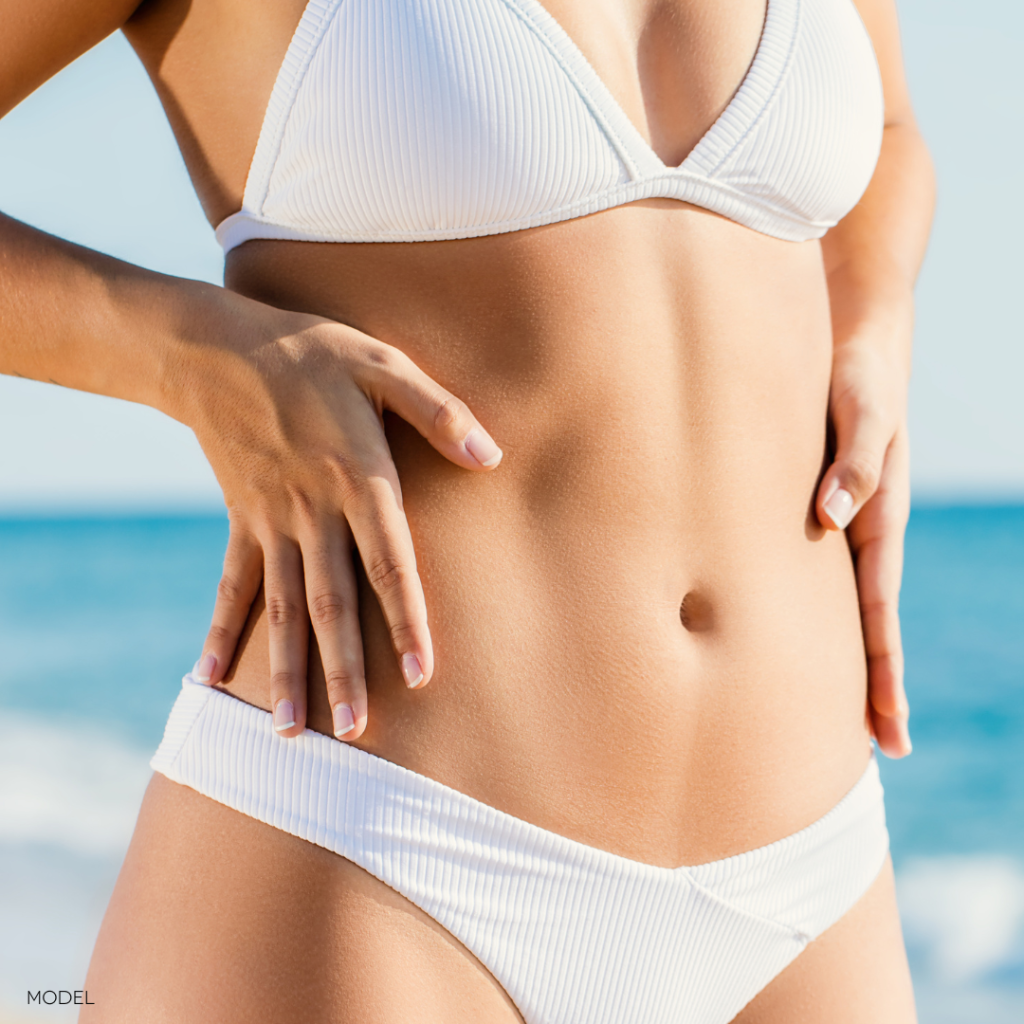
Our tummy tuck patients enjoy feeling more confident and comfortable in swimsuits and fitted clothing, often wearing smaller sizes than before surgery.
Is a Tummy Tuck Right for You?
Tummy tuck surgery benefits women and men of all ages who are self-conscious about excess abdominal skin. Ideal candidates meet the following criteria:
Are in good overall health
Have reached and maintained a healthy, stable weight
Are prepared to take time out of their busy lives for recovery
Are not planning future pregnancies
Have realistic goals and expectations about their results
After an in-depth consultation, Dr. Amalfi or Dr. Krasniak will help you decide if a tummy tuck is right for you and discuss a treatment plan that works for your lifestyle and goals.
Choosing the Right Plastic Surgeon
The Quatela Center in Rochester is the choice of abdominoplasty patients from cities throughout Upstate New York, including Syracuse and Buffalo. Patients also travel from throughout the U.S. and around the world for our natural-looking results and dedication to safety.
Dr. Amalfi is a board-certified plastic surgeon and body contouring specialist. Her many published clinical works include a chapter on abdominoplasty for the landmark textbook Grabb & Smith Plastic Surgery, which is required reading for plastic surgery training. Dr. Amalfi includes 360-degree liposuction in every tummy tuck to improve contours all the way around the abdomen. A true believer in “mom guilt,” Dr. Amalfi understands firsthand the physical and emotional demands of being a mom. She supports her patients who want to feel great about how they look after pregnancy and has witnessed how the changes benefit them and their families.
Dr. Krasniak is a board-certified plastic surgeon, Alpha Omega Alpha honoree, and published researcher focused on patient-centered care. A specialist in breast and body surgery, Dr. Krasniak finds it gratifying to enhance his patients’ appearances and their physical and emotional comfort.
Perform a brief physical examination to assess your concerns and body proportions.
Explain the surgery and what to expect during recovery.
Detail possible risks and complications.
Your surgeon creates an individualized surgical plan that will safely combine the procedures you are interested in while minimizing incisions and recovery time. Then, your Patient Consultant will review your procedure cost, payment options, and scheduling choices.
Tummy Tuck Techniques
Full Tummy Tuck
Restores firm, flat abdominal contours by removing excess skin, repairing abdominal muscles, and reshaping the belly button. An extended tummy tuck provides additional skin removal with a longer incision. Our surgeons typically include liposuction of the flanks to add definition to the waist. This technique is appropriate for the majority of patients.
Mini Tummy Tuck
Removes excess skin and fat just below the belly button with a shorter incision than a full tummy tuck, similar to that of a Caesarean section. Best for a small number of patients whose concerns lie below the belly button.
Reverse Tummy Tuck
Tightens skin and muscle in the upper abdomen with a horizontal incision placed across the inframammary fold (breast crease) easily hidden by a bra or two-piece bathing suit. Breast enhancement surgery can be performed through the same incision. This option is limited to skin tightening and/or muscle correction in the upper abdomen above the belly button.
Fleur-de-Lis Tummy Tuck
Removes skin horizontally and vertically with a vertical incision along the midline of the abdomen from the chest to the pubic area and a second horizontal incision low between the hip bones. Our surgeons often use this technique for post-weight loss patients who need significant skin removal.
Mini Tummy Tuck Before and After Photos
This patient had a mini tummy tuck with liposuction to iliac and revision of a C-section scar.
Do Males Get Tummy Tucks?
Yes, men who have lost a significant amount of weight often choose tummy tuck surgery to remove excess skin and fat and tighten lax ab muscles as part of their body contouring after weight loss surgical plan.
Male Tummy Tuck Before and After Photos
This male patient had a tummy tuck, liposuction, and male breast reduction after weight loss through bariatric surgery.
Your Tummy Tuck Procedure
Dr. Amalfi and Dr. Krasniak perform tummy tuck surgery at our private, onsite, accredited surgery center using general anesthesia; the surgery typically takes 2 to 4 hours to complete. Their expertise and training in various surgical techniques allow them to tailor the procedure to your needs and preferences.
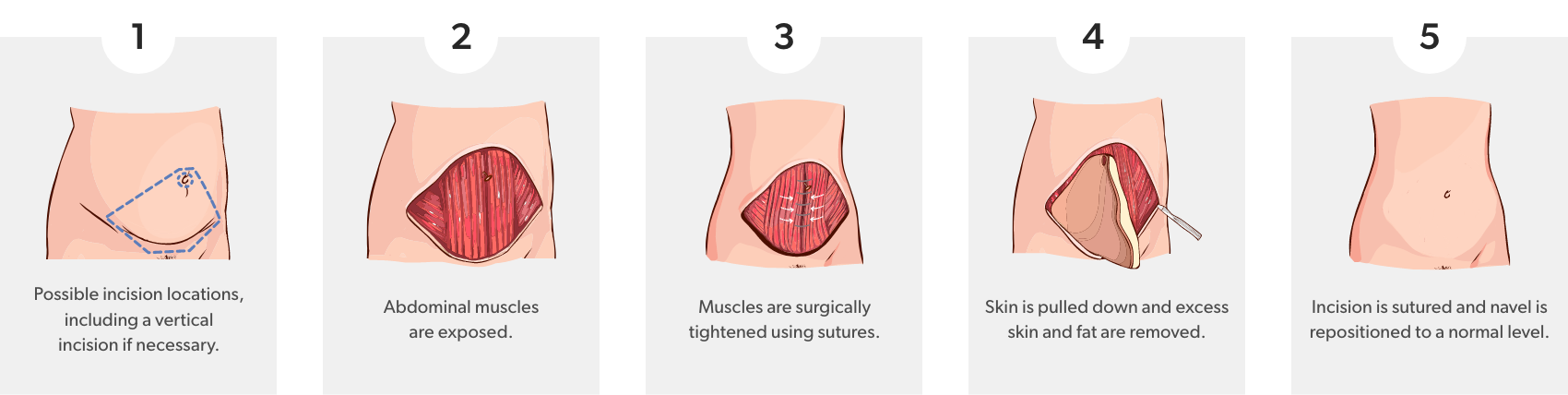
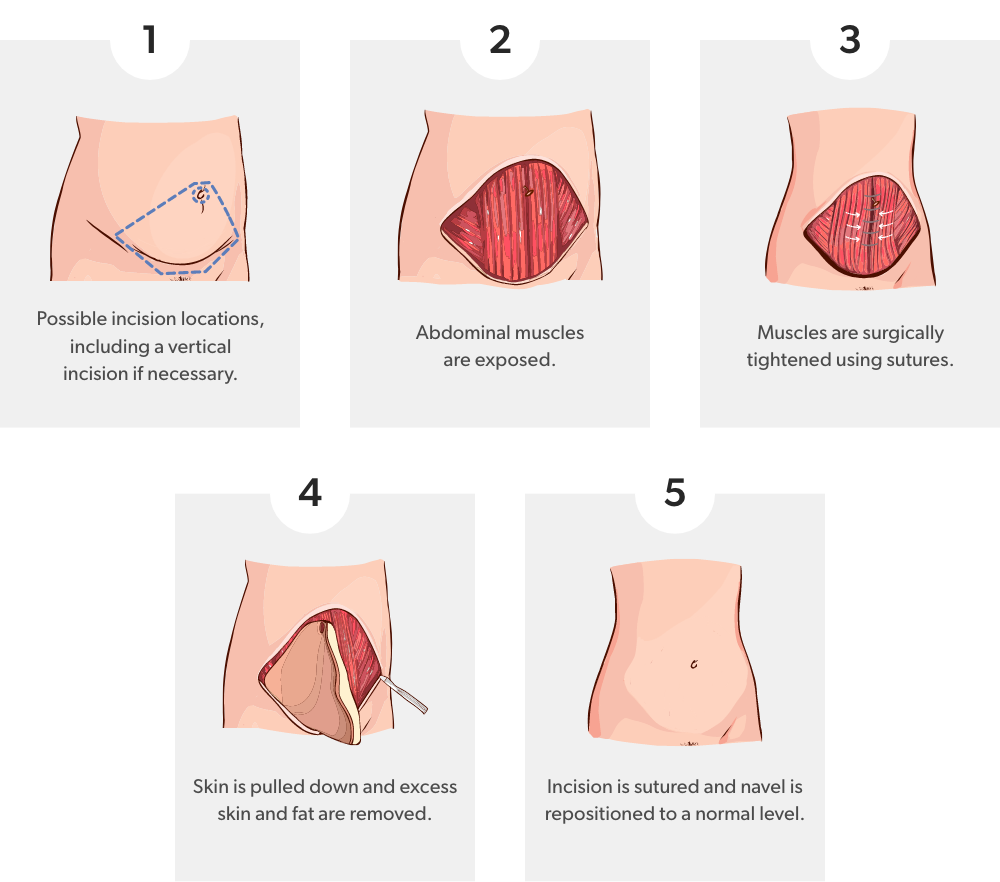
For a full tummy tuck, the surgeon begins by making a horizontal incision from hip to hip just above the pubic bone. This procedure involves repositioning the belly button using an incision that encircles it and drops down to the horizontal incision. Then, the surgeon removes excess skin and fat. Our plastic surgeons commonly perform liposuction during a tummy tuck to sculpt and shape the abdomen. A full tummy tuck also includes abdominal muscle tightening. Before closing the incisions, the surgeon pulls the underlying tissues tight, applies a long-acting local anesthetic, and inserts surgical drains to prevent fluid from building up in the surgical area.
Tummy Tuck Recovery Timeline
Expect bruising and swelling in the abdominal area; it should resolve gradually during recovery. You will remain comfortable with a long-acting anesthetic and prescription medication. The newly tightened areas will also be temporarily numb. You will wear a specialized compression garment to minimize swelling and help you heal, and you will walk slightly bent forward initially.
While recovery varies with tummy tuck technique and individual patient factors, it generally proceeds along the following timeline:
Day of surgery:
Return home in the care of an adult friend or family member. A long-acting local anesthetic will keep you comfortable for the first few days.
4 days
Swelling peaks.
7 days:
First drain may be removed as determined at an in-person assessment.
2 weeks:
Second drain removed. Return to normal upright posture and nonstrenuous work and activities.
3 weeks:
Bruising fades.
6 weeks:
Ready to stop wearing compression garment to control swelling. Gradually resume vigorous exercise once cleared by your physician.
You are required to have a trusted adult drive you to and from surgery and help care for you for at least the first 24 hours. We strongly recommend you arrange several days of assistance from a responsible adult to care for children and pets.
Expect to feel tired for the first few days, so resume activities gradually. Walking for short distances is fine and encouraged.
Stand slightly bent forward for at least a week to allow the surgical area to heal.
Wear compression stockings for 1 week to help minimize your risk for blood clots.
Continue to wear compression for 6 weeks to minimize excessive swelling.
Keep your hips flexed and your head elevated while in bed to prevent excess tension at the surgical site.
“The moment I met Dr. Amalfi I knew I was at the right place and in the right hands. She made me feel so comfortable and put me at ease with all my concerns regarding my tummy tuck procedure and being put under anesthesia. Post procedure I was amazed at how fast I was up and moving around. Recovery was nothing like I expected! If anyone is concerned or nervous about recovery don't be it's not that bad, I promise! My only regret now is not doing this sooner. The entire staff at the Quatela Center is absolutely amazing. Dr. Amalfi has literally changed my life and I'm forever grateful. She is the best and truly one of a kind and I can't thank her enough!”
Alicia Google
How Much Does a Tummy Tuck Cost in Rochester, NY?
The cost of a tummy tuck in Rochester, Buffalo, and Syracuse, New York, and surrounding areas depends on the specifics of the surgery. We provide an all-inclusive price quote during your consultation; it includes pre- and post-operative appointments, surgeon’s fees, surgery center fees, and anesthesia costs. For more information, see our page on Plastic Surgery Costs.
Complementary Procedures
Many patients combine tummy tuck surgery with other procedures to improve multiple areas with a single surgery and recovery period.
Removes fatty tissue and excess skin from the male chest. Reduces enlarged areolas, if necessary.
If you are ready to meet with one of our body specialists, request a consultation online, or call us at
(585) 244-1000 to schedule your appointment.
Tummy Tuck FAQ
Is a tummy tuck safe?
When performed by a highly trained and experienced plastic surgeon such as ours, abdominoplasty is considered extremely safe and effective. As with any surgical procedure, complications can occur. Some of these include bleeding, infection, scarring, blood clots, and fluid collection.
Does a tummy tuck get rid of stretch marks?
Stretch marks on the abdomen below the belly button are removed with the section of excess skin. Those higher on your abdomen will remain but will end up below your belly button after surgery.
Do scars from a tummy tuck go away?
While scars are inevitable with any surgery, our surgeons attempt to make abdominoplasty incisions low enough that the resulting scar is easily concealed when wearing even a low-cut bikini bottom. Scars gradually fade from red to pink to almost colorless over several months. We offer scar therapies to help the incisions heal and reduce the appearance of surgical scars.
How long until you can swim after a tummy tuck?
Our surgeons typically have patients wait at least 2 weeks before going in swimming pools, hot tubs, lakes, or the ocean.
What happens if you get pregnant after a tummy tuck?
We recommend holding off on tummy tuck surgery until after you’ve decided not to have more children. During this procedure, the surgeon tightens the skin and abdominal muscle fascia (both stretched during pregnancy). Most likely, pregnancy after having a tummy tuck will undo much of the improvement achieved with the surgery.
Are tummy tuck results permanent?
The results from a tummy tuck procedure should last indefinitely as long as you maintain a relatively healthy lifestyle that includes regular exercise and a nutritious diet. Gaining a significant amount of weight or becoming pregnant after the procedure can compromise the results.
Model
Surgical Destination
We’re Worth The Trip!
As a destination practice offering world-class care, the Quatela Center attracts patients from around the globe. Our virtual consultations and support program take the effort out of travelling for surgery.