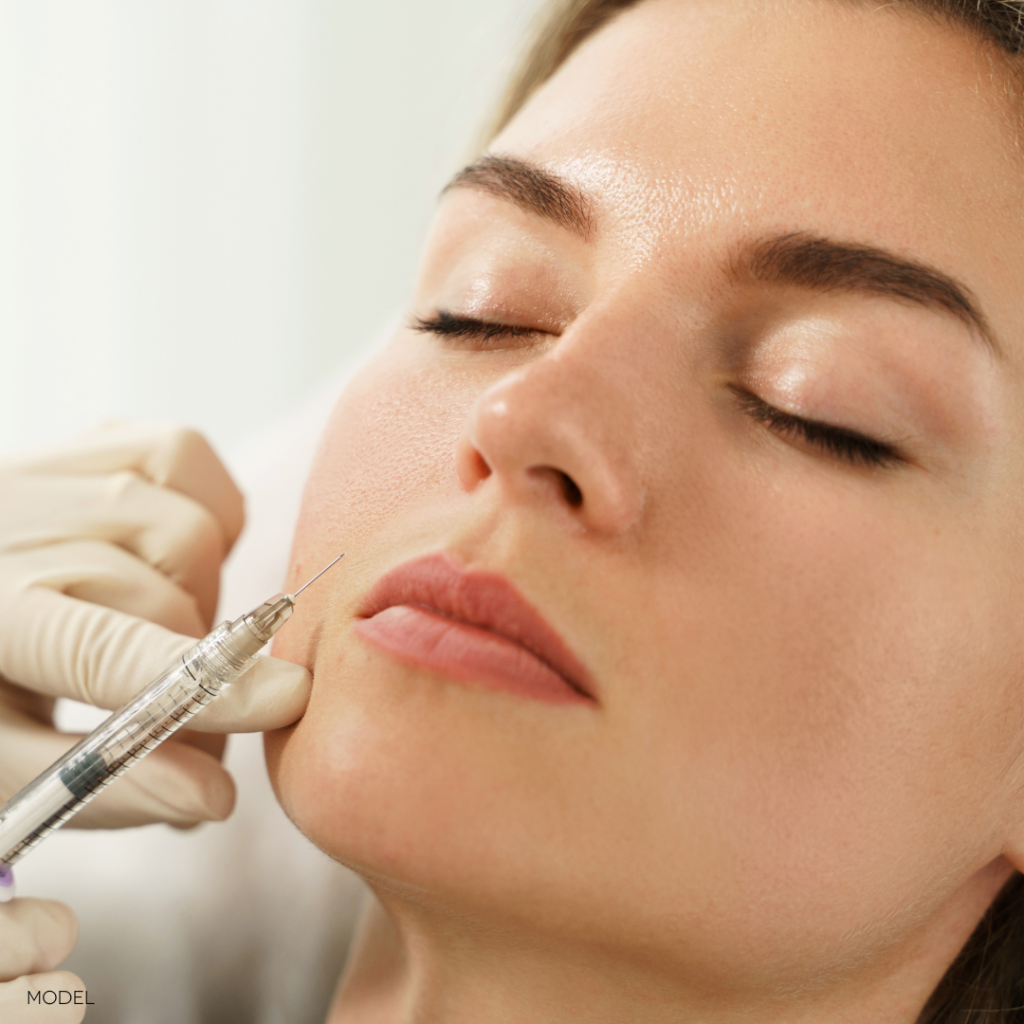
Facial Injectables
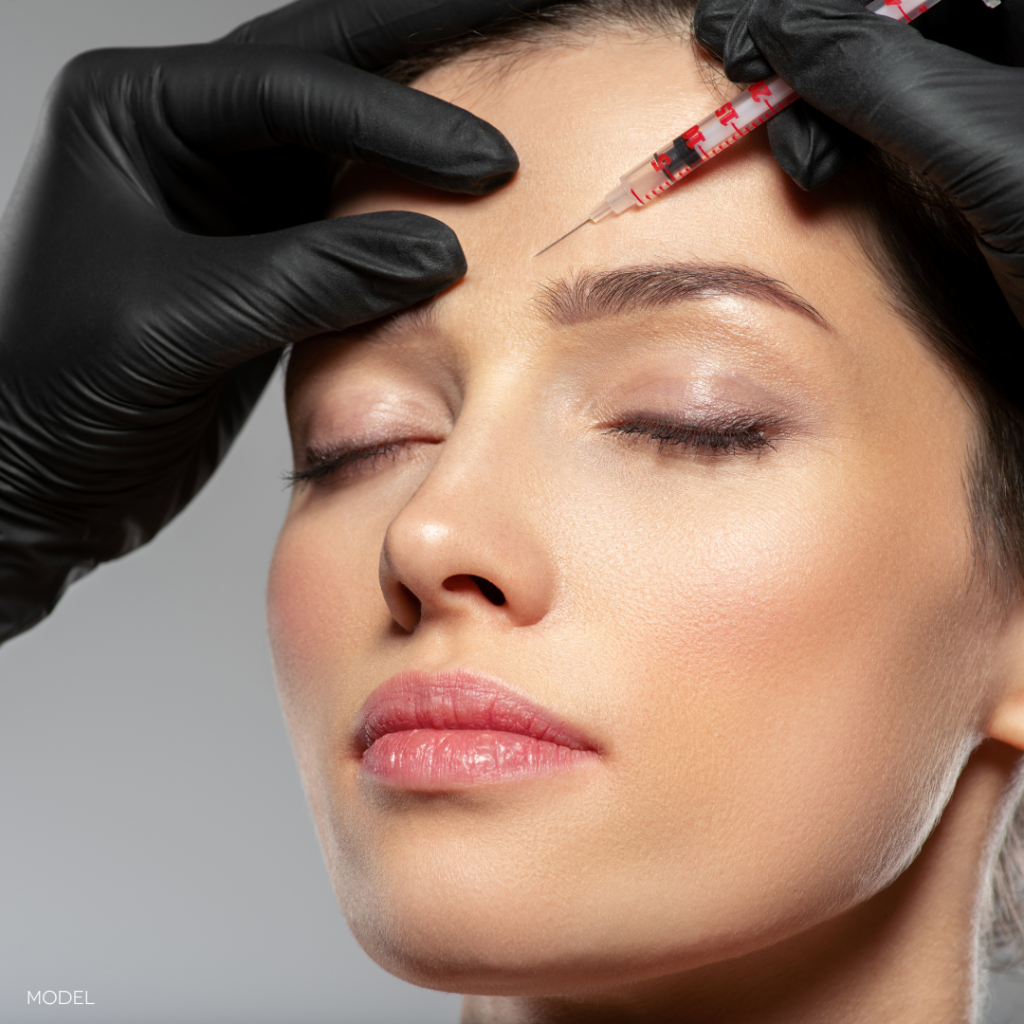
Injectable cosmetic treatments are more popular than ever, as women and men concerned about signs of aging look for nonsurgical solutions. With options such as BOTOX® Cosmetic and JUVÉDERM®, we use injectable cosmetic treatments in Rochester, NY to restore volume and create a more youthful appearance. We also offer combined nonsurgical treatments, such as our signature Q Liquid Facelift, for comprehensive facial rejuvenation.
Dermal Fillers
By offering a full menu of dermal fillers, our specialists can tailor treatments to meet the unique needs of our patients. Some filler products are better suited for some patients than others, and we can recommend the fillers that are best for you. Fillers are formulated to produce results for specific areas of the face, such as the lips or the cheeks.
Neurotoxins
We offer BOTOX® Cosmetic, Dysport®, and Xeomin®. Neurotoxins temporarily weaken the muscles that create dynamic wrinkles — the lines that form when you make facial expressions. Our surgeons often combine neurotoxins and filler as part of an overall approach to facial rejuvenation.
Lip Augmentation
Lip Augmentation enhances lip volume and proportion. Our surgeons use dermal fillers such as Juvederm Ultra Plus, Volbella, Restylane Kysse, and dermal fat grafts to help you attain voluminous yet natural-looking lips.
Q Liquid Facelift
This revolutionary treatment restores facial volume, reduces wrinkles, and provides a degree of facial rejuvenation with no surgery and minimal downtime.
The Q Liquid Facelift is a state‐of‐the‐art option that involves a customized combination of injectable treatments based on the individual goals of the patient. At your consultation appointment, one of our plastic surgeons will conduct an assessment to determine the combination of injectable products that will be used to create the best outcome.
Injectables FAQ
How are neuromodulators different from dermal fillers?
BOTOX, Dysport, and Xeomin are different from dermal fillers because they are injectable neuromodulators used to temporarily weaken the facial muscles. Neuromodulators are used in areas where the muscles are hyperactive, causing fine lines and wrinkles, such as the forehead, crow’s feet, and in between the eyes (glabella). Neuromodulators help to relax the muscle and diminish the appearance of expression lines and wrinkles. It does have a temporary effect that typically wears off after about 6 months.
How do I know which filler to use?
There are many different types of fillers available. Depending on where you want to add volume, different wrinkle fillers can be used in different areas of the face and last for different lengths of time. At the Quatela Center for Plastic Surgery we offer a variety of dermal fillers to fit most patient needs.
How long do injectable fillers usually last?
Injectable fillers, depending on the product used and the area injected, can last anywhere from several months to several years.
What is the downtime associated with injectables?
Most patients experience little to no downtime with neuromodulators and injectable fillers. There is always a small risk of swelling or bruising around the injection site, but this can be minimized by applying ice to the treated area in the office.
Do injections hurt a lot?
Most of our patients experience minimal discomfort due to the use of extremely tiny needles when placing fillers or neuromodulators. Numbing creams can be used on the skin or injections of numbing medications can be given to help prevent discomfort. Many injectable fillers even contain numbing medication within them, so that the area being treated becomes numb as the filler is applied.
People who live in Buffalo, Syracuse, and other areas of New York travel to the Quatela Center for Plastic Surgery for facial injectables and other facial rejuvenation procedures. Request your consultation using the online form to meet personally with one of our plastic surgeons or give our office a call at
(585) 244-1000 to schedule an appointment.
Related Injectables Blog Posts